Monday, May 2, 2011

Why on earth did it take so long to track Osama bin Laden to such an obvious hiding place in the suburbs?


THIS IS NOT a conspiracy theory. Let's get that out of the way first.

It's just a head shaker. It's just one of those things when you think about it, you just can't really believe it's true.

Osama bin Laden was found -- after nearly 10 years -- hold up in a house with no telephone or Internet service in the suburbs behind a 10-foot concrete wall ? Are you kidding? And no one noticed?

No one noticed. You really have to just shake your head at the idea because this guy is more famous than the Beatles. If John Lennon was right, that makes him more famous than Jesus.

Could Paul McCartney hide out in such a place? Not likely.

And, when I say, 'no one noticed' I don't just mean just the neighbors. I don't even mean the paparazzi. I mean the most advanced intelligence service in the world.

Maybe we should have put the paparazzi on bin Laden instead of the CIA?

Are you telling me the CIA overlooked a compound they now say was obviously built to house Osama bin Laden? A house whose occupants burned their trash rather than taking it to the streets? A house with no outside connections? With barbed wire around the perimeter? In the suburbs?

This house was so close to its neighbors that one of them tweeted the whole raid looking out his back window, from the arrival of the helicopters to their landing, the apparent shooting down of one of the choppers, the firefight and the subsequent explosion.

This is strange. I'm just sayin...

BTW: You have to give Tony Botello credit for courage for his post on the touchdown dance we've been doing in our cities since last night. Very unbecoming. We're better than this.

Wednesday, April 27, 2011

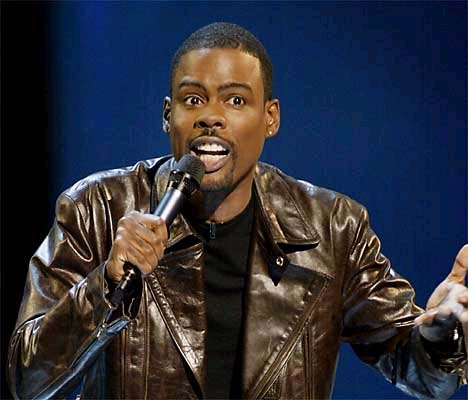
Chris Rock will save the world

As an addendum to John's fine post, let me add a ray of hope, courtesy of comedian Chris Rock, who gave an interview to Esquire Magazine a couple months ago.


Rock was asked for his opinion about the Tea Partiers - the same group of people, incidentally, who loudly call for President Obama's birth certificate - and the comedian, who proved he just may be the smartest man on the planet (which still makes him dumber than 50% of the population), delivered this wonderful answer:

"Kids always act up the most before they go to sleep. And when I see the Tea Party and all this stuff, it actually feels like racism is almost over... This is the act-up before the sleep... and next think you know they're f**king knocked out. And that's what's going on in the country right now."

I hope he's right.

Saturday, April 23, 2011

A fine conspiracy: Make Hawaii a state so Obama can be elected American president... The Birthers finally unravel this mess we're in in 2011


Conspiracy theories interest me primarily because they reveal so much about human nature. They show our need to know what can’t be known, even if we have to invent what can’t be known. As a species we are so evolved, we have time to worry about parallel universes, heaven and hell, and, of course, President Barack Obama’s birthplace.

Meanwhile, Rome burns.

The Birther phenomenon is really no surprise. Obama is black.

A chunk of America woke up the morning after the election, opened the morning newspaper and said, “What the hell?” Everything they knew about the world had changed overnight. They wanted a Mulligan. They wanted to rewind the tape. They wanted it to be 1958 again.

Of course, there are reasons for white Americans to wish for peaceful, profitable, likeable 1958 . But they were stuck with 2008, a Black president, a sour and uncertain economy, two wars, three-dollar gas, bad cholesterol, and diminishing returns on everything. Yes, and the designated hitter.

I really prefer the grand conspiracies. The Tri-Lateral Commissions. The McCarthy lists. The Free Masons. The Vietnam War. By comparison, the Birther phenomenon seems petty, more a conspiracy for weenies. Think of it this way. If the McCarthy’s had been right, what would the result have been? Nothing less than massive infiltration of government and the arts by the nation’s major enemy, an enemy with nuclear weapons and a massive secret police. Now, if the Birthers are right, what is the outcome?

Yep. A black man in the White House.

In that context, the Birther phenomenon is a little more clear, isn’t it.

Or, in a more contemporary context, compare the Birther conspiracy to the conspiracy embraced by those who think the attack on the World Trade Center was an inside job, the Truthers. An Ohio University poll suggests one in three Americans believe the United States government was somehow complicit in the 911 attacks.

Truthers: Two-thousand seven-hundred fifty two dead.

Birthers: Black man in the White House.

The New York Times – I know, they’re part of the conspiracy, what do you expect? – did a fine piece on the psychological nature of the Birther phenomenon last week.

In their own poll, the Times found more Republicans believe Obama was not born in the United States than believe he was born in the United States. In fact, only one in three Republicans believe Obama was born in the United States. Give that notion a second to sink in. One of the Times contributors, James T. LaPlant, political scientist and associate dean in the College of Arts and Sciences at Valdosta State, may have actually hit the nail on its ugly little head.

“I would also conclude that basic ignorance is at play. A poll of North Carolina voters in 2009 by Public Policy Polling found that 26 percent did not believe Obama was born in the U.S., and 20 percent were unsure. A question later in the poll asked if Hawaii was part of the United States.: 5 percent of respondents said no and 3 percent were unsure.”

Ah, the problem is simple. Hawaii isn’t one of the 50 states. Who knew?

But it is a state, you say. Ha. Fool. Think about it a minute. Why do you think THEY made Hawaii a state? Did we really need 50 states? No, we were fine with 48 or 49... whatever. Just use your imagination. The forces who wanted to put a Muslim in the White House to bring the United States of America to her knees in 2011, were simply thinking ahead. They’d have to build a plausible case for American sheep-thinkers to swallow to legitimize his election 49 years later. Think about it. SOMEBODY made Hawaii a state just three years before Obama was born. Do you think that's a coincidence?

Oh, and by the way, what kind of name is LaPlant, anyway? French? Spanish? Mexican?

I interviewed a guy once who was a conspiracy theorist way to the right of anybody on the political spectrum. He seemed like a nice man, an industrous small-business man in a struggling neighborhood, cordial, friendly, even a bit worried about me.

“John,” he said at the end of the interview, “if you really get into this stuff, be careful. It will take your mind.”

I don’t think he meant it quite like you’re reading it. He meant, I’m sure, it will come to dominate your view of the world and, ultimately, your life. But looking across the table at the fire in his eyes and the way his fingers fluttered over the pages of the pamphlets in front of him, I was struck more by his unintended meaning.

-- Lofflin

President Obama's certificate of live birth courtesy New York Times.

Monday, April 4, 2011

Smart phones for journalists: Sketchy notes from the MCMA awards conference... smart phones as brain ad-ons, reporting tools, awards ceremonies


I hate awards. They're not good for the profession.

So, why did I spend the weekend in Springfield, Mo., at the Missouri College Media Association awards banquet? Because I love the look on my students' faces when they win. I also dread the look on their faces when they don't. I want to be there for the smiles and I need to be there for the blank stares and the disappointment.

I could do without the chicken breast, rice, and carrots. Or the long wait every year for the vegetarian dishes.

And, I'm really uncomfortable with the cost, even if it does come from advertising money the newspaper has earned during the year. I have to say, though, this year's event was top notch all the way even if it did cost a lot. The host school did a fine job.

And, I always enjoy the speakers.

This year's speaker -- Dr. Clyde Bentley, an associate professor at the University of Missouri who led the charge in citizen journalism and now leads the charge in smart phone journalism -- was stimulating. The essence of his talk was this: Just as those of us in journalism are beginning -- just beginning -- to understand how to present news on the computer screen, we should be focusing instead on the smart phone screen. The computer screen is over. The smart phone screen is now.

Whew! And, I'm still teaching students how to count heads. Why? Because it's good for them... I think.

(Here is an aside I will develop more in a later post because I've been thinking about it a lot lately. Why headline counting -- or headline writing, for that matter? I see my role as a teacher in a way not shared by everyone who teaches and unrecognized, for the most part, by students. My model is the tour director, the fishing guide, the trail guide. I see my duty in those terms. It's my job to take the students to all these places and be sure they experience all these important events and headline counting in one such event. My expertise is in knowing what is important, what works, what helps them grow, where these things are located and how to get there. I can't control much of what happens when I get them there. They can either notice this fossil or not, look out across the Grand Canyon... or not.

So, I think headline writing is still an important stop on the tour... a learning experience to have, even if you will soon be writing headlines for smart phones. And, I could be wrong.)

Back to the speaker and the smart phones. His presentation was fascinating. I had already read about what a reporter could do with a smart phone as a reporting tool but I had never considered the possibilities in the breadth and depth he presented them. This will sound funny if you know the reference, but I think it is accurate. With a smart phone and a smart head, a journalist could, if so inclined, do much of the reporting William Least Heat Moon did to light up Blue Highways. She could find out the crime statistics for a place she visits by pointing her phone at it, know all the previous owners of a building, know the geography of the place in incredible depth as well as the geological history. All of this Least Heat Moon had to track down during years of research. It is at least half the reason to read his fine journalistic novel.

Of course, the other half is the people he met and brought to life from his journey. Blue Highways is driven by the people Least Heat Moon encountered -- good and bad. So, to do the work Least Heat Moon did she would still have to be really good at interviewing and at relating to other humans in general. Would the smart phone help? Well, yes. Our speaker said the next generation of smart phone -- the smarter phone -- will provide a surface to take notes in long hand which the device will translate to type. So, even in this important skill, the smart phone would be a helpful tool.

Of course, you still need to know what questions to ask, how to keep a conversation going, how to love to know what makes people tick, a deep sense of curiosity bordering on the pathological. But at least with your smart phone you would never want for something to write on.

To be fair, the smart phone would help her research the genealogy of the people she interviewed. She might also be able to check whether her subject has a criminal record -- helpful in some kinds of journalism. She could in an instant research how many people on the planet are in some way like the person she interviewed. No doubt the smart phone could help her do interviews in a hundred ways this old cat hasn't imagined and is probably not capable of imagining.

Of course, during the whole speech I was nagged by the question of what's next. If the computer is over, the net is waining, and the smart phone is the new 'it,' well... what's next. I'm tired of living behind the curve. I had a record player in my '55 Chevy in 1964. It worked like a jukebox with a very strong spring on the needle to keep my 45-rpm-copy of Maybellene from slipping during street racing burnouts. I went through three copies of that record in 1964. But in 1965, the stereo 8-track tape hit the market and my record player hit the garbage can -- pretty as its chrome self was. The car record player was available at Sears for one year, I think. One year.

Then I got to thinking about the event itself. It cost a good deal for us to attend. We rented a van, drove for three hours across the state on $3.50-a gallon gasoline, took hotel rooms, paid a large price for a small meal, then drove home the next day. One year a student of mine -- I shudder at this -- went out at the last minute and bought a $200 dress for the event in the city where it was held and, I double-shudder to point out -- just as the baked chicken breast cost a lot per fork load -- that dress cost even more per inch. At any rate, the event is costly to everyone and we may not always be able to participate because of the cost. To put the cost in perspective, we could print another issue of the paper for what we spend to attend the event.

So, why not just get ahead of the curve now and mount the next MCMA awards banquet and conference on the smart phone?

The working sessions could easily be broadcast through Skype or whatever technology is available next year. Same for the business meeting which we usually have to miss because we can't afford two nights in a hotel and the students can't get away from families or work.

Instead of the banquet, each school's journalism students could gather at a favorite watering hole on campus, sit around a big booth, enjoy a nice meal and then set their smart phones on the table in front of them the way they do anyway -- even at the formal banquet. The awards could be announced from afar, the division would pop up on smart phone screens all around the state, then the category, then the honorable mentions would pop up, the third places, the second places, and, with the drama building, the first places would appear. Difficult to pronounce names would not be a problem by smart phone. Certificates would be downloaded to the winner's phones -- they could print them out on nice stock ... or turn them into wallpaper for their dusty computer screens or just turn them into aps on their smart phones. Their smart phones are, after all, them; not an extension of who they are but who they are. As a smart phone ap they could wear their award like an electronic tattoo etched into their electronic skin.

This would be a smart way to meet the future and I offer it as an idea only partly in jest.

-- Lofflin

Photo image courtesy: prconsultantsgroup.com

Wednesday, March 30, 2011

It's just like the Internet, only 100 times faster

Good ol' Kansas City, Kansas, was at the center of the electronic universe today when Google announced that KCK would be the first place to receive its Fast Network.
That's great. Even though the city - where John grew up and where I currently live - has been in the midst of an economic boom over the last decade, KCK could still use some good news. It's a city divided - everything east of I-635 is thriving, everything west of that line is run-down and depressed. A lot of it has to do with history. A lot of it has to do with race. A lot of it has to do with politics.

The news of Google bringing its Fast Network here could pull those two sides closer together, which would be terrific.

But I'm dubious about one thing, and it's this claim that the new internet service will be 100 times faster than current broadband service.

Really, Google? A hundred times faster? How can that be literally possible?

I remember the days when internet was dial-up. I remember sometimes waiting three, four, five minutes for a page to load. By the end of dial-up service, internet speeds were down to, I don't know, fifteen-second load times.

But in the broadband world, I can click on a link and I'm at that page almost instantaneously.

Is instant not fast enough for some people?

I haven't seen a single article about this announcement that questions the veracity of this "100 times faster" claim. But I would think common sense would come into play a little bit. If Google said, "Internet speeds twice as fast," then maybe I could get behind that. What kind of super-surfing are people doing? "I can't wait a full second for this page to load! I need it in one one-hundredth of a second, dammit!"

With speeds this fast, Google better be able to take me to a page before I even think about clicking on the link.

All hell is breaking loose in the world... we interrupt this program for an important announcement: Kansas does not win NCAA championship!


The world is in serious trouble. Budgets for education and health care are being cut dramatically. (What’s wrong with this picture?) Nuclear water 100,000 times more radioactive than normal ambient readings, is leaking into the Pacific Ocean. The Middle East is in turmoil, caught in a revolutionary wild fire.

And Kansas lost to VCU in the Elite Eight.

As I said, the world is in serious trouble.

OK, I knew Kansas was in trouble about two minutes into the game when, with a 6-0 lead, the camera caught one of The Twins exhorting the crowd to cheer. Six-zero does not indicate a significant moment in the game. The job ain’t done… the job has barely begun. Had a sense of entitlement set in?

Somebody needed to explain to the players the difference between entitle-ment and title win.

What followed was a disappointing evening for the faithful. Have you ever tried to strike wet matches to light a campfire? You just keep thinking the next one will spark up and you’ll get that tinder going and any minute now the flames will spread.

For a minute it looked like the sparks might catch on, but then a couple of defensive assignments were forgotten and the team with no entitlement came raging back.

Here’s the stunning part. The eight-graph Kansas City Star article – I’m still confused about why a sports writer at such an event could only squeeze out eight graphs before morning – garnered 94 pages of comments within two hours. Today it stands at 1,300 comments despite being retired from the front page of the Web site. Another Elite Eight story garnered more than 900 comments.

Which adds up to more than 2,200 instances of the most vacuous drool the human mind has ever produced.

Yes, the world is in serious trouble. Kansas lost in the Elite Eight. Fifty-six teams, including Ohio and Duke, went home first. And, by the way, pink slips went out in the Kansas City, Kansas school district -- 57 comments --, the Shawnee Mission School District is set to slash million from its budget, six nuclear reactors are in serious trouble in Japan, the United States is participating in a third simultaneous war, the Middle East has come unhinged…

Stay tuned for further developments ... on KU basketball.

--Lofflin -- and if you want to think more about "irony and outrage" read this fine story from today's New York Times (while it's still free...)

PPS: If I were a basketball coach I would put an immediate stop to this habit of raising the arms above the head begging fans to cheer. Everything about this all-too-common WWE-style practice is wrong. It absolutely shows a fundamental misunderstanding of what is happening in the game. Are you actually saying, "Hey, we did something great here but you people in the stands didn't recognize it because you're too stupid?" If I were a coach, I'd tell my players -- let your actions tell the story. If you play well enough, the fans will cheer. If you don't (or if it is only two minutes into the game...) they won't cheer. Your focus is on the game -- or it should be. Let the cheerleaders do their jobs and you do yours.

Reed photo courtesy: http://www.stsnews.com/news-morris-twins-lead-kansas-past-texas-a/

Morris photo courtesy: http://www.kansan.com/staff/mike_lavieri/

Saturday, March 26, 2011

No one, Royal's announcer says, watches baseball these days -- why?


Baseball revenues are growing but no one watched the World Series.

Why?

That's the question Ryan Lefebvre raised today as he broadcast a spring training game from Arizona. If baseball is so popular, why were the numbers for the last World Series so low, especially when compared to the Super Bowl? Lefebvre actually used the phrase "no one watched" but it was understood he meant not as many watched baseball as watched football.

He was involved in a long, long conversation with Denny Matthews about changes in the game that might make it more popular to watch. When I say long, I mean long. I drove halfway to the grocery store and didn't hear a pitch called. I could tell something was happening on the field from ambient noise but I didn't know what.

Of course, it was a spring training game and why on earth they were broadcasting a spring training game escapes me ... and probably escapes them. (Or, why I was listening...) And to compare the World Series to the Super Bowl makes about as much sense. If the World Series were one game and the whole season of baseball consisted of about a dozen games, the audience for the World Series would be huge. Of course, then it wouldn't be a "series." It would be the World Bowl, or something like.

It might be unfair, but maybe the first place to look for the answer to this question is in the broadcast booth. Maybe people have tired to the current schematic for broadcasting baseball.

Let's start with announcers. Maybe people have tired of listening to announcers prattle on about questions like why more people don't watch baseball, this at the expense of calling the game in front of them. The broadcasts these days, like many other areas of modern life, are more about the announcers than the games. Baseball broadcasters are learning this from basketball broadcasters who learned it from football broadcasters, who learned it from television news anchors and reporters who learned it from MTV. In an effort to shine a light on their own personalities, they provide little in terms of detail or information about what is happening on the field. They need to sit down in front of a second grade class and read a bunch of children's books to the kids and learn what storytelling is and how it works. They need to respect the listener's time. They need to let go when their personal stories and overwrought ribbing of each other threatens to span innings, when their inside jokes get old, and when their cheerleading for management and the organization gets tiresome.

When in doubt, tell us about the weather.

And, for the love of god, lose the damned nicknames.

We get it. You're buddies with the players. You spend time in the locker room. You're part of the team. We get it, so let it go, please. It does get old.

By the way, none of this seems to apply to Denny Matthews. I hadn't expected to write that, but it's true.

So, broadcasters might be part of the problem with broadcasting. I'm thinking the lockstep schematic of televising games might also be part of the problem. The formula is just too predictable to be interesting. Every pitch includes about seven to nine cuts and most of the time they come from the same angles and in the same order. It's enough to put a restless seven year old to sleep before his bedtime.

Suggestions: Stay on one thing long enough for the viewer to understand what's going on. Every pitch can't be cut like a music video. Watching a game would -- and is -- like watching 250 music videos in a row. And, change the camera angles. Station a camera inside the dugout for a few innings and weave in shots of the players on the bench or at the bat rack or watching video in the locker room or hitting off a tee in the tunnel. Move a camera to the stands for an inning. Mount a camera near the roof for a straight down shot. Show us what the game looks like from the bullpen. Just changing the position of the cameras would wake up a broadcast and put some unpredictability back into watching.

It wouldn't hurt to make decisions in the truck based on what's critical in the game at that moment. It might actually add narrative and drama. In fact, it might be good to develop a narrative across the span of nine innings and find ways to photograph that narrative as it evolves.

Also change the play-by-play / color man dynamic. It's old and it's boring. I like announcers like Frank White who can explain what's happening. That makes a difference. Maybe a little more silence would be good when there's nothing to say. Let us hear some of the ambient sounds in the stands once in a while.

The biggest change in the game today is our new understanding of the numbers. Announcers and producers need to spend a little time learning about this side of the game then devise ways to bring these ideas and these numbers to viewers. I saw a presentation at the I-70baseball writers' conference recently of graphs based on the new math of baseball. They were compelling. A clever announcer and an agile production crew could certainly develop such a thing into a powerful illustration of the drama on the field.

I'm sure there are some things about the game that would help. If you want to think radically, why not borrow the one-one count from slow pitch softball? That would speed up the game. Or the one-pitch rules sometimes employed in crazy slow pitch tournaments? Or pinch runners from home plate? Or make balks part of a pitcher's arsenal? Or allow foreign substances on the ball? Or legalize steroids? Or lower the mound and bring in the fences? Wait, they already did that.

Don't get yer panties in a wad. I'm only joking. How do I know that somewhere out there a baseball executive is saying to himself, "Yes, why not?" Shudder...

But if the problem is that the game is growing in popularity but fewer people are watching broadcasts, then it just seems logical for broadcasters to look first for the answers in the booth and the truck, and leave the damned game alone.

--Lofflin

Wednesday, March 23, 2011

Ink's hatchet job on Nick Wright simply wrong


I'm no fan of Nick Wright but the hatchet job done by Kansas City Star writer dugan arnett on the 610 Radio sports talker is unconscionable.

No wonder the Star casts dugan arnett's byline in lower case.

That, of course, is supposed to make it look hip. It has to look hip because it runs in the Star's transparently feeble attempt to look hip called Ink magazine. Any parent and most teachers know you don't reach young people by trying to talk or look like them.

If you reach them at all, it is because you find out what they want to know, and what they need to know, and you provide it to them honestly. You don't reach them by condensation, pandering, or all lower case bylines.

The theory today is that you reach the Internet generation by writing very brief, no-holds-barred, crude and rude copy. Now, if that is not an insulting idea, I don't know what is. arnett's piece fulfills all of those criteria except brevity. Tom Wolfe would be proud.

Well, maybe not.

Are there no editors left at the Star?

At some point after the Star directed readers to the Ink link, they decided to include an explicit language warning. That's appropriate, but it doesn't identify what is actually offensive about this story. It is, in fact, offensive because it is needlessly small minded, mean spirited, and shallow, and because it is a transparent attempt to look hip. Hipper than hip, quoth Tower of Power.

Good for the goose; good for the gander, you say?

Not necessarily. Good journalists strive to be better than the people they sometimes write about. It's called class.

--Lofflin

Friday, March 18, 2011

Grant Hill on Jalen Rose makes a case for the responsibility of college grads in the world


As a college graduate, what is your responsibility in the world?

Graduate... responsibility? Wait a minute, I paid for that education. That's like the guy at the McDonald's drive-through asking me to pledge to use that hamburger and fries for good in the world.

Well, I just read something I want to pass along. Now, what I read was interesting but it has little to do with the question I posed -- what responsibility college graduates have in the world. The article in the New York Times was by Grant Hill, a rebuttal to some things Jalen Rose said about Duke players in his ESPN 30/30 documentary on the Fab Five. You will want to hear this discussion of the controversy by Chris Broussard who just explodes on the subject on ESPN. Damn!

Hill's rebuttal is even more strongly worded and fiercely illuminating. But, in talking about Duke graduates around the world, and about the charter school Rose has started in his home town, Hill said this:

Just as Jalen has founded a charter school in Michigan, we are expected to use our education to help others, to improve life for those who need our assistance and to use the excellent education we have received to better the world.

That paragraph impressed me. Could I say this to my students? Could I tell them with a straight face they owe the world something for the gift of a college education?

I don't know. I'm not sure graduates look on education as a gift. It costs too much and is too hard fought for them to see it as a gift, I'm afraid. And those of us in academia have participated in the cheapening of a college education by promising to educate people anywhere, anytime, with minimum inconvenience ... not unlike the promise of the drive-through window. Should people really be grateful for the sort of torture good teachers put them through?

That's really a tough question, isn't it?

Grant Hill talks about education as a privilege. I wish I could find the words to explain that to my students.

--Lofflin
Image courtesy CBS Chicago / Doug Pensinger, Getty Images

Wednesday, March 16, 2011

In Japan, nuclear hocus pocus: Should we fear half-baked terrorists or corporate scoundrels


All along we have been worried silly about some half-baked terrorist with a dirty bomb in a suitcase when we should have been worrying about a handful of corporate culprits driven by arrogance and greed who overestimated their ability to control nuclear disaster, who figured they could get by with dissimulation and, perhaps, outright lies, and if they couldn't, knew they would be far enough away from their own nuclear reactors to escape anyway, should the situation warrant.

And, apparently, the situation warrants.

Because of our terrorist worries, I might add, we've come to the point of nearly abdicating some of the rights of privacy and law we have held dear.

When the chairman of the United States' Nuclear Regulatory Commission warns Americans in Japan to take caution -- that Japanese officials are playing down the danger -- you get some notion of the scope of the disaster and of the veracity -- the lack of veracity -- of these corporate characters.

Yes, right, what we need to fear are terrorists with dirty bombs...

I seem to be in an unhealthy place with this most recent nuclear nightmare. I need to back off from the coverage some. I can think of two reasons for this. The first is that I was an impressionable child during the Cuban Missile Crisis. I literally had nuclear nightmares for years, into my 20s and beyond.

The second reason, no doubt, is my father. My father died of emphysema. And I remember many times as his life was winding down, my father talking about that mysterious, noxious, black cloud of something that floated over the freight docks in the East Bottoms one midnight, and how he never felt the same again.

I imagine such a fate for the Japanese people tonight.

--Lofflin

Saturday, March 12, 2011

Mike Burke or Sly James: Will either provide a new vision of city government or will it be the same old-school politics yet again?


Thinking about the mayor’s race in Kansas City and what my story about Mike Burke’s father, Jim Burke, might say about it.

True, that story is 30 years old. But, it seems to me a man’s relationship to his father never ages. My father was a union man. He was a Republican then the war in Vietnam made him a Democrat. He had a very strong view on loyalty. He also had strong views on Las Vegas and those who spent their money there. He had strong views on the Methodist church and who should sit in the front pew (us!). He couldn’t sing a lick but he believed everybody should sing hymns loud as they could.

He had an incredibly strong view on responsibility. “Son, if you don’t signal that turn, the guy behind you will slam on his brakes, the stupe behind him who is not paying attention will slam into the back of him and two kids in the backseat may die… all because you were two damned lazy to signal.”

So, I hear his voice in my head all the time, even if I don’t want to.

Now, I’m not trying to guess what Mike Burke, one of the candidates for mayor, hears in his head. But, if he hears his father’s voice, and if my 30-year-old story was accurate in relaying his father’s voice, then my guess is he is guided by some of these principles.

I might venture the notion that he is probably committed to development, the way his father apparently was. I see him as a person who considers development a key element in the health of a city. His father’s work was mostly north of the river, where undeveloped land could be purchased – I would guess his focus might return north of the river as often as possible.

One thing we tend to see in politicians is they tend to be formed by their first political successes.

I think this old article might point to the idea that he is well connected. And, I don’t mean connected to Tom Pendergast, as his father was. I just mean connected to the business and political establishment – as his father was. In that way, his roots run deep in the way things have been done in the city across decades. My guess is a vote for Mike Burke is a vote for political stability. It’s up to you whether you consider that a good thing or a bad thing.

For me it’s a bad thing. I’m willing to try almost anything in Kansas City as long as it isn’t the same as what’s been going on since Emanuel Cleaver left office.

On the other hand, I like what his father had to say about Pendergast. In the article, his father allowed that the Pendergast years, “were the greatest growth period in Kansa City history.” Now, I’m not in favor of boss politics but I do think it is good for a mayor to keep in mind what made boss politics work – and it wasn’t always muscle. Sometimes it was the fact that people worked which made boss politics work.

My guess is neither candidate has the background to suggest he will provide something new in the mayor’s office. And if there is one thing the city needs, it’s something new.

Because the old school ain’t working.

--Lofflin

Tuesday, March 8, 2011

Getting organized

Sorry I haven't written much here lately. John's been writing some amazing stuff, as usual, and I hope it's getting well-read. I've been keeping pretty busy with a full-time job, another blog and, recently, a nasty case of pleurisy, which put me in the emergency room yesterday. I'm still in pain, and staying home from work today, but I'll be fine.

In the meantime, I wanted to share this video, which I found at literary agent Janet Reid's blog:

Sunday, March 6, 2011

James E. Burke, the would be mayor's father, and Tom Pendergast... a classic Kansas City story I wish I could remember


Kansas City Star reporter Eric Alder had been working on a piece about mayoral candidate Mike Burke and he needed some information about Burke’s father James E. Burke, a Kansas City lawyer and real estate developer, for the profile. Alder called me because he found a reference to an article I had written about James Burke. I couldn’t find the magazine or my notes in my pack rat boxes – it was 30 years ago – so I went down to the Missouri Valley Room in the Kansas City Mo., Public Library last week to find it and send him a copy.

Turns out I wrote the piece in 1981 for a business magazine called Corporate Report: Kansas City. I was wet behind the ears, having spent just 10 years in journalism, and it was a very long piece, typical of those who are wet behind the ears. Here’s the strange thing: I remember almost nothing about it. Frankly, reading it at the library was like reading somebody else’s words. This other guy, I might add without enough humility, was a darn good writer.

As I read it, some of the situation and the interview came back to me, but not much. Alder and I agreed I should not be considered an expert on James Burke.

Nonetheless, the article is pretty interesting. (I feel like an athlete talking about himself in the third person…) I tried to remember why I went to the 24th floor of the Commerce Towers to interview the elder Burke, who was 73 at the time, and -- I found out from Alder’s article -- died the next year before another birthday. Two reasons for the article emerged: One was his relationship to the World’s of Fun property and to the Hunt Midwest Cave. He once owned that land with partners Lamar Hunt and Frank Carswell. Several months earlier I had done an article about Hunt Midwest which included the intriguing notion that an underground World’s of Fun might be built to keep the park going all year long and to assuage rainy summer days.

The second was Jim Burke’s relationship to Tom Pendergast. Like all green feature writers in Kansas City I was enamored of anything Pendergast. Jim didn’t disappoint. He served as the boss’s attorney near the end of his political career. He recalled the Good Friday he and a bulldog lawyer named John Madden ushered their powerful client down the hall of the fifth floor of the Federal Building after Pendergast had been indicted for income tax evasion.

It was the first time, the elder Burke said, that he had met Pendergast. He was also, on that Friday, placed in charge of Pendergast’s corporations while one of the last of the big city bosses served his time.

The story included an extraordinary excerpt from a speech the elder Burke made in 1976 at the Shepherd’s Center at 5144 Oak. I have no idea, at this distance, how I came upon the excerpt because I probably didn’t attend the talk. It’s likely Mr. Burke gave a copy of it to me during the interview.

In the speech, Jim Burke talked about a request Tom Pendergast made. He was fresh out of prison and still on probation by my account, still in prison by Alder’s. Here’s how Burke described the encounter in the speech:

“He reached into his pocket and drew out an envelope and said, ‘On this envelope are the names of 12 men. They’re the blue blood of Kansas City, as you’ll recognize when I read off their names. They are prominent in civic and banking and various fields. I want to give you in detail my relationship with those men over the years, how I helped them grow in whatever their business was.

“'When I get through, I’d like you to go to each of these men and tell them that I’m intending to apply for a pardon, and I’d like them to write a letter on my behalf. Tell them that once I let go of those letters… they might see them on the front page of the Star.'”

I was probably pretty excited at this point in the interview. I was probably putting little asterisks everywhere in the margins of my notes to be sure I didn’t miss the good stuff later when I started to write.

The elder Burke said he finally secured all the letters. It took four months, the president issued no pardon, and Pendergast died before he could finish the sentence.

I picked out one particular story from the speech for my article. Burke apparently told the audience J.C. Nichols had been one of the men on the list. He said when he went to the pioneering developer and made his request, Nichols told him he didn’t care if the letter appeared on the front page of the Star and to simply tell his secretary what to write and he’d sign it.

“There, in my opinion, was a great man in Kansas City,” Burke told the audience.

I’m not sure how, or if, any of this helps anyone understand candidate Mike Burke. I quoted several prominent Kansas Citians in the article with exceptionally good things to say about his father. Most mentioned how much the elder Burke liked working for the city under the radar. From here on, that won’t be possible for his son.

If you want to read the entire article you will find a PDF of it here.

--Lofflin

Friday, March 4, 2011

Mickey Mantle and Jane Leavy: Do you have the guts to know the truth and lose your hero?


Mickey Mantle should never have farted in that 8-year-old girl's face.


Farting in her face instead of signing her program was probably the biggest mistake the great Mick ever made in a life full of mistakes because she grew up to be a fearless journalist and relentless researcher. Then she wrote "The Last Boy: Mickey Mantle and the end of America's childhood" which delivered the unexpurgated story of the ballplayer who was, for many of us, second only to our father as hero and role model.


Ugh.


It’s hard to imagine Jane Leavy left out even one sad, disgusting, tragic story about the boy from Commerce, Okla., but she probably did. Maybe the Mick should not have hit on Leavy when she came to one of his golf tournaments late in his life to interview him for the Washington Post. Or maybe the Mick shouldn’t have passed out with his head in her lap at the table in the restaurant at the end of the evening.


I won’t say it. OK, I will.


Strike three.


Actually, I’m trying to be funny because sometimes it is easier to laugh than to cry. I’m not implying that farting in her face when she was a child or resting his hand on her thigh when she was a woman is why she told his story so honestly. She didn’t go after Mickey Mantle. She went after the truth about Mickey Mantle.


And, if the truth is uncomfortable to a man who grew up with Mickey Mantle on his wall, so be it. I had a hard time finishing this book, to be honest. One reason is I’m nearing the same age Mick was when he died and I’m more than a little uncomfortable with reminders of mortality.


Part of the reason I thought about quitting the book several times is Leavy destroyed the myth I had built around Mantle, who always represented the rebel, the unrepentant man who refused to grow up and put on a necktie, who farted in the face of Yankee brass, not little girls who want autographs.


I needed Mickey Mantle to be my example of raw power, the guy who said of Charlie Hustle, if I’d wanted to dunk the ball in over the second baseman my whole career I’d have worn a dress. I needed Mantle to be my example of triumph despite flaw. I needed him to represent those of us who have problems with authority.


I needed a hero who was so gifted he could live life exactly the way he wanted and still win. That is the myth, really, of Mickey Mantle for me.


And, I needed the poetry of his swing. I needed the image in my head of the guy who never got cheated at the plate, who went all out every time, who never seemed to be calculating what to do but went, not for the fence, but for the street every time.


I can close my eyes right now and watch that swing. I have gotten through more than one deadly boring meeting watching that swing over and over behind my eyes. I’ve been in trouble, sitting across from a fuming dean of students as an undergraduate and across from a fuming college president as a professor, and watched that swing to steady my nerves. That swing was magic.


I needed Mickey Mantle to be the last boy… and for that to be ok.


But, I’m not sure he was the end of America’s childhood. In fact, I’m sure he was not the end, if I represent any significant part of America. He wasn't the end; he was the last glowing ember. What Leavy should have said in the title is after you read this book America’s childhood will be over for you.


This is tough stuff. This is the stuff of tragedy. All of Shakespeare is like a "Saturday Night Live" skit compared to this. If you cherish your Mantle myths, as I did -- if you cherish your childhood and you’ve tried to prolong it into your sixties, as I have – better not open the cover.


If you have the stomach for the truth… it’s somewhere inside.


--Lofflin


Topps 1952 Mickey Mantle #311 courtesy The Golden Age of Baseball Cards.


Saturday, February 19, 2011

Dinosaur thinkers, ink print lovers, arrogant 4th-estate fraternity brothers, this hatred's for you, or, Why people hate newspapers and love the Web


People hate newspapers.

That's how it seems to some of us who have loved them.

I've been thinking a lot about this lately with funding challenged for our university magazine and budget cuts always in the air. I've been reading posts on the list-serve from folks in my journalism education interest group who are losing print editions of magazines and cutting back the frequency of their newspapers -- or losing them altogether.

The chatter I hear everywhere hurts, actually. From the speaker who is addressing what he thinks is an exclusive group of sportswriting bloggers who gloats over the loss of one city's daily paper while the editor who lost his job in that debacle sits quietly in the audience, to the folks who barely know me who send me every article ever written -- seemingly within minutes of its publication -- about another newspaper going down... I've come to the conclusion people hate newspapers.

They hate newspapers now, and they have always hated newspapers. From the guys who fix my car to some of my academic colleagues, they hate newspapers.

How else to understand their joy?

OK, take that as a challenge. How DO we understand their joy? Here are some possibilities:

  1. They hate being late to the party. This is especially true of some academics who are ultra-sensitive to the charge of being out of touch... because, frankly, they often are. To make up for the fact that their concerns are often deeper and older than the immediate concerns of the breakfast table, they make a special effort -- sometimes self-defeating -- to always catch the wave... which they never do. So, they are always on the back side of the wave, calling it the front side and defending it to the death even after it has run ashore.
  2. They have always seen journalism as a fraternity to which they did not belong. I think this may be the most important reason. Newspapers and their journalists have always held power. Lots of power. But nobody there got elected. Nobody there was super-human. No six-foot-eight, three-hundred-pound athletes or Nat King Cole-throated singer. People just like you and me who are doing what anybody could do... except for the fact they endured four years of journalism education to be allowed into the fraternity. You hear this especially among those who advocate for blogging. Now, they say, anybody can be a journalist. It is, indeed, a democratic notion.
  3. Newspaper people, in doing their jobs -- sometimes carelessly -- have hurt them, their family, one of their friends, their political party, their race, their town, their hometown football team. Payback is a bitch, isn't it?
  4. They want to be witness to time. It seems to me that much of the glee is similar to the glee we all feel on New Year's Eve. We're witness to the old year passing away and the new year arriving. It's a powerful human emotion. We were there. We saw.
  5. It's a good thing the First Amendment doesn't come up for a vote anytime soon.

I started by saying it hurts to suddenly realize people hate what you love. But, to be honest, I have to add this love is not unconditional. Like a lot of journalism teachers, I got into teaching because I did not like what was happening in the profession and I wanted to help, in some small way, straighten it out. I didn't hate newspapers or hate journalism, but I sure as hell wanted to fix some of the things I disliked about both. Across a quarter-century of teaching, that desire has been my north star.

Unfortunately, this tectonic plate shift in the technology of newspapers and magazines is not a paradigm shift in how they actually report the news or serve the community. So, the problems I so disliked are still around, Web or ink.

It helps me to understand my visceral reaction to the glee so many people seem to take in the demise of dinosaur thinking, as they like to call it. From now on, I'll try not to take it personal. Bogart said that, I think, just before he pistol whipped a thug who was tailing him.

Lofflin

This wonderful image courtesy The Great Illuminator. I find their opinion about newspapers exactly what I've described here; I don't share their concern about making newspapers eligible to be non-profits because I'm sure they will always be -- regrettably -- for profit; but I love their choice of artwork...