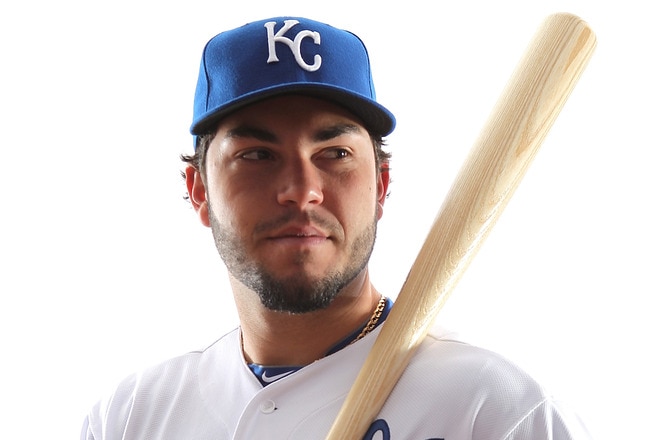
When I was much younger, my father took me and my brother to a the last game of the season for the Kansas City Royals.
We went to a lot of games when I was a kid - one summer, it seemed like we were out at the ballpark every other night - but this game sticks in my mind. It was the the late 80’s or early 90s. Back then the Royals were pretty good, posting a winning record most years, but the MLB structure of the time lumped the Royals into the huge American League West division, which featured seven teams and only one playoff spot each season. They were never good enough to break through and make the playoffs.
That year, the Royals were well out of the race, and the final month of the season was meaningless in the grand scheme of things. The last game of the season was especially pointless.
But we had an absolute blast that day. The stadium was on the verge of being empty. The orange seats of the Royals Stadium (yes, this was in the pre-Kauffman Stadium days) upper deck were a vast sea nothingness, and they belonged to us. The players were having fun down there on the field, looking forward to their pending winter vacation, and it rubbed off on the handful of us in the crowd. After the game, we waited outside the stadium and collected autographs. All the players were signing that day. All of them were happy. One of the players (Danny Tartabull, maybe?) left the stadium in a huge fur coat, a woman on each arm, and climbed into the back of the biggest limousine I’ve ever seen.
As for the game itself? I remember nothing. I just remember the atmosphere that day.
Flash forward twenty or so years to Sunday afternoon. The 2013 version of the Royals were playing their last home game of the season. That game was much different. The Royals were in the midst of a Wild Card race, the first time they had been playoff contenders for a decade. After battling the Texas Rangers into extra innings, Justin Maxwell blasted a walk-off grand slam for the win.
And it was arguably the most important moment in Royals history since Game 7 of the 1985 World Series.
Yes, the Royals were sadly eliminated from contention a few nights later. But when this season started, could you have imagined the Royals competing for a wild card spot?
This team was written off multiple times during the season - even before the season began.
When the team traded top prospect Wil Myers to Tampa for James Shields, they were written off as an organization with its head placed firmly up its butt.
When the Royals lost on Opening Day, they were written off as a team that couldn’t even win with Shields, a legitimate ace, on the mound.
When the team went 8-20 in the month of May, they were written off as the same old Royals, with no hopes for postseason play.
When the Royals lost 10 out of 12 after a stretch where they went 17-3 spanning late July and early August, they were written off as a team that couldn’t stay on a roll.
And in the heat of the playoff race, every time the Royals lost a game, they were written off.
But the truth is, the Royals were contenders through the first 158 games of the 2013 season. And this season was no fluke; the 2014 Royals should be just as strong, if not stronger. They won’t be written off so quickly in the future.
Which makes last Sunday’s home finale that much more important.
It wasn’t just an amazing, walk-off, extra-innings win in front of a sellout crowd. Sunday’s game was a message to the rest of Major League Baseball: The Royals are not a joke anymore. The Royals are for real. They may be eliminated in 2013, but any opponents who write off the Royals in the future will regret it.
Take a look at the lede paragraph from the New
York Times' Syria story today. Peel back the layers of language.
The key thing to notice here is
how the persona of the leader substitutes for the names we might apply to the
actual troops in battle. That is always dangerous, in my opinion. It
represents the beginning (or end) of the process of 'softening up' the country
for war.
President Bashar al-Assad’s public activities — in which he acts as if nothing untoward is happening in Syria — mask his increasing aggression in battle and belie his supporters’ fears of an American attack.
Notice this phrase: '...hisincreasing aggression in battle...' The writer
might otherwise have said, simply 'mask the increasing aggression of his
troopsin battle...' That is more accurate. al-Assad, is not actually in battle.
By
summarizing the entire 'other side' in the person of one man -- Hitler,
Hirohito, Fidel, Ho Chi Minh, Sadam -- the other side of the conflict can become
the cartoon face of some comic/evil character. That's the danger.
This lede paragraph posits the
entire problem with al-Assad -- demonizes him in a narrow frame. That's not to
say he isn't a demon, but it is to say the intent of the writer -- conscious, or
unconscious -- is to suggest his elimination will end the conflict. Of course,
the destruction of Damascus and/or the end of his regime will do no such thing.
See the results in Egypt.
I haven't been reading closely for this
but my impression is this represents a sharp change of direction in the language
of the New York Times. It isn't easy to see but it's there all the same, and it's something to worry over. To me, it is always a signal we are, as a people, being softened up for war.
The suspension of a dozen major league ballplayers for performance enhancing drug use -- cheating -- was big news yesterday. Biggest news was the suspension mess around media darling Alex Rodriguez, a New York Yankee pain in the neck who should have been banned for life but was just banned for, in essence, two seasons.
So stupidly dominant was this story that other broadcasts of major league games cut away, often at critical moments, to his four rusty, uninteresting, turns at the plate in Chicago. Four ESPN talking heads -- two of them former Major League players, one reporter and one 'host' -- attempted to put the situation into perspective, but failed. Their words were sometimes thoughtful but their demeanor betrayed impatience and boredom with a subject so overblown, so inflated, yet so 'newsworthy' that it forced them to rehash what they had rehashed from what they had rehashed a week ago.
Lost in the thick fog of the no longer compelling A-Rod scandal were a number of excellent games instrumental to the progress of a wonderful baseball season. The Dodgers, for one, moved into second place all-time for consecutive road wins with a nail-biter pitcher's-duel against the St. Louis Cardinals. Other interesting moments in the life of the season were revealed in other baseball cities, including our own August miracle.
A daughter was born to one of my former students -- a college pitcher himself -- during the Rodriguez soap opera. If he hadn't been at bedside through 16 hours of labor, he might have, himself been ranting about Mr. Rodriguez. Instead, he sent me a photograph this morning of him holding his tiny new daughter in his big hands, the way you hold a baseball if you are a pitcher -- soft and gentle. Funny thing: No mention of Rodriguez in his e-mail message.
Yes, the drama of the baseball cheats, and the passion play of the biggest cheat of all, may have held baseball fans in its thrall -- though I doubt it -- but many more important events happened yesterday.
The finest words on this subject came from former Major League player Doug Glanville in today's New York Times. I'll leave you with these because they are damn near perfect:
There used to be a reason we were counting. It helped build
a story. Numbers allowed us to compare players within a generation or an era,
and across leagues, countries and decades. They tallied how you ranked in any
category and subcategory of your choosing. Or, better yet, in ways that may
have mattered just to you in that quiet moment playing with your son in the
backyard.
You accumulated because each chip was a singular flake of
gold from the game. I had 1,100 hits in my career, but none were as magical as
number 1, and none as emotional as numbers 999, 1,000 and 1,001, which all came
the day my father died.
Numbers can have meaning because of what we bring to them.
Their value, and meaning, may change over time. But when all that matters is
the numbers as numbers, you have zeros.
Don't worry. It wasn't exactly wine. It was a fresh tomato from the garden. The first
of this late blooming year. A Celebrity, if I’m not mistaken. Not large. Somewhere between a baseball and a softball. Unmolested
by squirrel teeth outside; deep red and full of juice and flavor inside.
As flavorful as red wine. Three dimensional flavor. Tangy.
Summer sweet. Lingering. I took one bite and had to bow my head on the tablecloth to
savor all that little tomato had to offer. Now, what to call the other red fruit I’ve been eating all
winter? Tomato will not do.
Just a quick hit on this today. The Royals' Brain Trust says it is searching for a second baseman at the trade deadline. Apparently, nobody who has played the position this year is satisfactory for a playoff run.
No question the Royals need a second baseman. They have needed a second baseman since Frank White.
The interesting notion that the Royals are buyers instead of sellers -- or would-be sellers... you have to have something someone else wants to be a seller -- at the trade deadline tells you life is better in the executive suite and on the field.
Now, this thought certainly goes back a ways and is probably unfair. It has, however, stuck in my craw a while.
In 2010, the Royals traded Alberto Callaspo to the Angels at this time of year for two pitchers, Sean O'Sullivan and Will Smith. Callaspo was yet another player the Royals' Brain Trust thought wouldn't amount to much, despite showing promise. Think Raul Ibanez.
Ibanez, by the way, has hit 24 home runs this year and is mentioned in several trade rumors today. O'Sullivan, has pitched 19 innings and given up 23 hits for San Diego in 2013. Smith has been up and down I-29 this season, with little success here.
Today, Billy Beane traded a number one draft choice for Callaspo as the first-place A's prepared for a stretch run. What did the A's need?
As an addendum to John's article last week, here's something else the Kansas City Star should apologize for: this article referencing a recent SciFi Channel movie called "Sharknado," which is about sharks falling out of tornadoes or some such thing.
The headline is "Sharknado: Can it happen here?"
I think the Star's article is supposed to be tongue-in-cheek. But it's hard to tell from the writing. In fact, the reporter went so far as to interview the display curator at the Sea Life Aquarium in order to ascertain whether shark tornadoes are a thing that is real.
(Spoiler alert: NO)
I'd like to think this poor reporter was given a crummy assignment on a slow news day and tried to do his best with it.
I’m calling out the Kansas City Star here and now for bankruptcy of news judgment this morning. At 11:59 a.m., a story about Paula Deen was actually listed SECOND under “Latest News” on their opening Web page.
You read it right: Latest News.
Second under “Latest News” is certainly bad enough. With Kansas City erupting in violence of surprising variety and Egyptian troops firing on demonstrators, with a do-nothing congress and hairball legislatures on both sides of the state line rendering governance either dangerous or cockeyed, in a world struggling to cope with completely new viruses both real and virtual, and a universe of new threats to privacy in the name of security sprouting up like mushrooms after a rainy season, opening the Web page with Paula Deen is just the worst message this newspaper could send its readers about 1) what’s important in the world this morning, and 2) what the editors of this newspaper think is important in the world this morning.
If you are a reader of the Kansas City Star, you have been disrespected by this tripe.
And, tripe, it is. Not only is this a story about poor Paula Deen, a woman caught in the meat grinder of a 24-hour news cycle that has turned all of us into sick paparazzi, but it’s a story about Paula Deen being offered a publicity stunt deal by a porn outfit. Nothing happened here. Some bright public relations or marketing person saw an opportunity to send out a press release and get a little notice for his or her boss. That’s all. No action. Nothing. Probably didn’t even waste paper or stamp on the idea. Hacked out an official looking e-mail and sent it to every newspaper in the country with a single click. That’s it. A worm on a hook.
Now, don’t go to the story if you’re expecting something juicy. It’s a plastic worm -- dare I say? -- for a plastic world. (Yes, I did watch "Woodstock" yesterday…) There is no there, there. If you are looking for something salacious, you’ll be completely disappointed.
And, if you care about journalism as a profession at all, you’ll be sorely disappointed by the writer of this story who actually received a byline for a 10-paragraph, 124-word, brief. I use the word ‘story’ loosely. What is the story here? Search for it yourself. I mean, it isn’t even funny, let alone a story.
Oh, the writer was careful to include a few obvious puns about aprons, biscuits and butter – no reference to “The Last Tango in Paris,” unfortunately. None of it was delivered with any sort of wit, even juvenile. I’d be shocked if she spent more than five minutes knocking it out on the computer.
Apparently, her editor spent less time considering whether to publish it, and where to publish it.
The writer and her editors, and the newspaper as an entity, owe their readers an apology. They might as well apologize to Paula Deen in the process because she is, after all, a real human being, not just headline type or pixels in a mug shot. Ugh!
Did the Royals just sign a 16-year-old to a $1.3 million
contract?
If Mr. Escobar were my regular, best-hope, shortstop, I’d be
looking for help, too. But, a 16-year-old?
Question: Will the Royals make it possible for Marten
Gasparini to finish high school?
Reading about ‘gap-to-gap’ power in a 16-year-old just feels
strange. Above average bat speed, they say. Above average for 16-year-olds or
above average for minor league or major league players. Marten is already six
foot – are they sure he is finished growing? What happens when he discovers
girls?
I remember what happened to my baseball work ethic when I
discovered girls at about the same age. Well… when I really discovered girls, since I had discovered them long before in
a more, let’s say, passive way. Only god knows what would have happened if I'd had $1.3 million to spend on girls at 16. As it was, I embezzled $32 as treasurer of the MYF to keep my first girlfriend in french fries and malted milk.
$1.3 million in the pocket of a 16-year-old? Mickey Mantle
was 19 and had graduated high school when he signed with the Yankees for
$1,500. And he still had a lot of growing up to do. Think about it. Mickey was
raised on hard scrabble ground by his tough lead miner father in a dusty
Oklahoma town. If anyone should have been seasoned for the mental rigors of
professional baseball, it was The Mick.
Yet, he nearly folded during his first year in the minor
leagues. It took some harsh words from his father, Mutt, to keep him from
boarding a bus back to Commerce, Okla., mid-season.
I have no idea what sort of life Marten Gasparini has lived
in Italy. But the idea of a 16-year-old with a $1.3 million bonus makes me
queasy. And, not just for the money spent because the Royals certainly waste
plenty of money on much older folks. I’m just thinking about the kid, about
what this means in the shape of his life. Somehow, ironically, it doesn’t seem
quite fair.
Played softball last night. Arrived home from the park about 9:30 p.m. My wife was
watching Star Trek and, exhausted, I settled into the couch next to her. Like
an alien force, a species previously unknown to man, I was sucked into the
Enterprise, a vapor existing only in the big ship's computer grid.
When the Enterprise was safely on its way again, I returned
instantly to human form and suddenly remembered Game 7 of the NBA’s final contest of the
season.
That’s the point of this screed.
I went upstairs and turned on the television. When the
picture came up, I saw a long shot of the court from high in the arena. The players were returning to the court from a time out. The
announcer told me the game was down to the last 39 seconds. It seemed like it
took half an hour to play those 39 seconds – in reality, well… it may have. I
didn’t put a clock on it. It was good basketball – tough, smart, skillful… full
of fury, joy, despair, and balletic feats so contrary to the laws of gravity
they were bound to amaze even the most jaded watcher.
But those 39 seconds were all I needed. I didn’t pine for
the other 47:20. I didn’t hope for overtime. I didn’t wish for another game. I
didn’t regret missing entirely four games of the series. Those final 39 seconds
were quite enough.
Yes, the NBA has problems.
And, I’m not a casual basketball fan. I love the sport. In
winter, the smell of the gym was ambrosia to me. I sat parked on the floor in
front of our black and white television countless Saturday afternoons in winter
watching Russell and Chamberlain do battle. A freight train could have rumbled
through the living room and I wouldn’t have budged. I didn't miss a single game my alma mater played this past college basketball season. Not one.
But, somewhere along the
line, professional basketball lost its luster for me. Maybe it began to seem too
easy for the players. Maybe the chest bumps and styling to the sideline cameras
got old. Maybe it’s the simple fact that the finals are played in June -- on the longest day of the year -- when my
body has retooled completely for summer, for outdoors, for sun and wind and
cottonwood in the air.
Whatever the reason, it was surprising to me to realize those
final 39 seconds were all I wanted of professional basketball for the year.
Some of this may be obvious to the casual baseball fan, but if I were General Manager of the Kansas City Royals, I would do the following things over the next several weeks:
* When Jarrod Dyson is healthy enough to re-join the major league club, release Jeff Francoeur. Dyson and David Lough have proven this season that they're better contibutors than Francoeur, despite his power surge in yesterday's game. Francoeur is an amazing personality and a great guy to have in the clubhouse. But with the exception of his exceptional throwing arm, Francoeur is a liability. I would recommend trading Francoeur, and obviously as GM I would take that route if available, but who's gonna want him in any kind of decent trade? Releasing him is the only option. And heck, if he is claimed off waivers, the Royals might get some salary relief or a player-to-be-named-later in a waiver trade.
* Give Dyson a chance to earn the extra starting position. He's earned it. But I would keep him on a short leash. If he stops hitting, and if his incredible speed doesn't help to produce runs, I would flip David Lough to the starting position with no hesitation. Heck, since Dyson's injury, Lough has practically been the starter anyway.
* Trade Ervin Santana, even if the Royals are in the chase by the trade deadline. Santana is having a pretty solid year so far, and it turned out to be a really good pickup. I think he could help us win down the stretch. But not long after the trade deadline, two really promising arms - Danny Duffy and Felipe Paulino - will be returning to the team after recovering from Tommy John surgery. And they're gonna need a spot to fill. I would trade Santana for either prospects or a run-producing second baseman to a National League contending team in need of pitching.
* Figure out the infield situation. George Brett's presence as hitting coach has coincided with a resurgence by first baseman Eric Hosmer, but the same can't be said for third baseman Mike Moustakas. He may need to spend some time in the minors to figure things out. I'd give him to the All-Star Break, and if he doesn't get it together, send him to Omaha. Alcides Escobar is struggling at the plate this year, but I like him as the NO. 9 hitter instead of the No. 2, and I don't have any problem with him remaining the every day shortstop. Then there's second base. I love Chris Getz' attitude, but he's not a major-league caliber everyday player. The second base job needs to belong to Eliot Johnson and/or Miguel Tejada until a more permanent solution is found. That solution could be a trade (see above) or the emergence of Christian Colon in the minor league system.
* If the Royals don't have a winning record by the All-Star Break, it's time to fire Ned Yost. This team should be winning. And some of his decisions as the field skipper have been downright baffling. And keep this in mind: the last time a team fired Ned Yost during the season, by the 2008 Brewers, that team made the playoffs. If Yost fails, I like John's idea of offering the job to Frank White. If the Royals have to fire Yost, it probably means we're mostly writing off this season, so I'm good with giving an inexperienced White a chance to prove himself. But long-term, I think we should be looking for a successful, experienced major league manager.
Jamie and I took a trip to Metcalf South Shopping Center tonight for the annual Johnson County Library Used Book Sale. It's awesome - seriously, check it out. It's the best used book sale in Kansas City, and it's going on all week.
After a few minutes at the sale, we noticed one of the things we despise most: poachers.
What are poachers? If you've been to a used book store, a thrift store or a used book sale in the past few years, you've probably seen one. They have little barcode scanners attached to their smart phones, and they scan each and every book they run across to see if they can make a profit by selling it online.
To put it plainly, these people are assholes. I hate them. If you are one, I hate you. What those people do is not illegal, but it's annoying an immoral as hell, in my opinion. Book sales are for people who love books; people who come in and take all the best ones simply to resell them at a profit are despicable human beings. They don't care about the books they're scanning; in fact, they generally don't look at anything except for the barcode.
Pictured: the hand of an asshole.
The poachers were out in force tonight at the book sale. They were working in teams; I saw three women who were connected to each other via bluetooth headset, talking over strategies wirelessly. All the poachers carted their finds around in big wheeled carts that, of course, blocked the stacks of books from the regular people who were just looking for good things to read. And they were aggressive, too; pity the poor soul who gets in between them and a table of potential profit.
Jamie and I shopped around for about an hour, then before exiting we found a bench and sat down to take stock of our selections and weed out the ones we really didn't want after all. We ended up with a stack of four or five books in a discard stack.
Before Jamie had a chance to re-shelve the books, I stopped her. I saw a poacher in front of us and I was struck with inspiration. I laid out my plan to Jamie, and we executed it brilliantly.
The poacher was scanning a table of books and had started to wander away from her cart. When the space between her and her cart got big enough, I stepped between the two. Jamie swiftly came in behind me and gently placed our leftover books in the poacher's cart, then walked off. When the poacher turned around and noticed I was between her and the cart, I apologized and walked away in the opposite direction.
We met up a few minutes later and high-fived.
The beauty of our revenge mission was that the poachers don't actually look at the books they scan, so she probably never noticed our books in her cart. When she gets home and scans the books again to post them on Amazon or eBay or wherever, she'll be confused as hell wondering why she put those books in her cart. Heck, maybe the four or five bucks we cost her will make her reconsider whether it's a profitable venture. Probably not, but a boy can dream.
As I said earlier, these people are completely within their rights to poach at used book sales. And I feel like I'm within my rights to screw with them. I have zero remorse, and I would happily do it again.
In fact, if you're a poacher, and I run across you at a book sale, don't be surprised if you end up with a few duds in your basket.
But only because I’m in the middle of a big writing project.
Otherwise, I’d have filed this piece Wednesday morning and beaten him to the
punch.
Hiring George Brett as hitting coach for the local boys Thursday morning was
a stroke of genius. Well, put it this way: Sometimes the smartest thing you can
do is the most obvious thing you can do.
Or, as a Texas politician once said: When you realize you
are digging a hole for yourself, stop digging.
The Royals have dug one helluva hole for themselves as an
organization. And, from the beginning they’ve had some of the answers right
under their noses but refused to turn to them. My guess is everygeneral manager and every manager wanted to
do this thing by himself, make his own name, put his own stamp on the turnarounds
that never came. To bring in Brett was to introduce into the current equation the fiercely competitive impulses of those
brief shining moments in Royal’s history. That could be dangerous for the brain trust.
And George said it himself in interviews yesterday, though
not in these exact words. How can you be the one to fire George Brett?
Now, I’m going to expand the discussion a bit. What I would
have posted Wednesday morning would have been this. Dayton Moore should start
by driving over to Community America Ballpark today with a five year contract
in his hands, walk up to Frank White between innings, apologize, then hand him
the contract. Frank White should be the manager with a guaranteed five years to
work.
And Kevin Seitzer should return.
Well, I’ll stop there for now. I sound like a damned homer.
The public relations brilliance of this is difficult to
overestimate. In essence, what Moore is saying to the fans – would be saying if
he took my advice – is, ‘OK, stop complaining, stop whining, stop yelping.
Here. Here are your guys. The guys you want in the dugout. They’re here for
five years, at least. I don’t want to hear another word about it. I can’t fire
them and neither can you. They ARE the franchise. I’ll put my full attention on
getting them the players they need. But, in the meantime, shut up.’
Well, something like that. This move alone will stick a sock
in the radio sports talkers for a while. Which is fine. They can yodel all they
want about how brilliant this move was. They can take credit for it, if they
like. It’s their job. It’s how they make a living. Everybody wins.
And, winning is what this is about, as much as public
relations. Or, should be. Did you see new life in the dugout last night when
the television cameras focused there – which they did a lot with Number Five on
the top step? Did you see smiles? Did you see that, ‘What did I tell you look?’
pass between the worst hitting right fielder in baseball and the man with 3,114
career hits after the ninth inning home run?
No, it can’t last forever. But, then again, did you ever
think anyone could take Goose deep when George did?
Well, one more thing. When you read Brett’s comments in the
paper this morning, you realized what has been missing in that dugout this
season. The man who could always choose the right pitch to hit into the alley has trouble choosing the safest words to say politically. His words this morning could lead to only one
conclusion. The current manager doesn’t have it. Maybe never did. He has to go.
The two cannot co-exist in the Royals’ dugout for long. They see the game, the
players, the spirit of winning, to say nothing of the craft of hitting a baseball, from completely different angles, and those
angles are incompatible.
Who's faster: Billy Butler or Alcides Excobar?
A club run by the likes of Brett and White would not tolerate the play of some of the current nine. While Alcides Escobar can make brilliant plays a short -- and muff the easy ones just as often -- Billy Butler beats him to first base every time on a pop up to the outfield or a ground ball to second. In the scorebook, the result is the same. But in the spirit of the nine, such things make all the difference.
Now, Dayton Moore needs to take my advice and get himself
out to a T-Bones game. The reclamation work has only begun.
--Lofflin, feeling strangely energized this soggy morning…
For over five years now my family has been keeping a secret that isn’t a secret at all: anyone who has interacted with my parents during that time knows exactly what it is.
It’s a problem that has come to consume all of our lives. A problem that continues to grow worse. But because that problem reached a breaking point recently, it’s one we feel like we can talk about. These are the words that until now I’ve only been able to say to close family members and the closest of friends:
My father has Alzheimer’s disease.
*****
We first started to notice it six or seven years ago. During the course of a Saturday afternoon, Dad would ask one of us a simple question, something like, “What time do the Royals play tonight?” An hour later, he would ask the same question again. We didn’t think much of it, or at least we didn’t admit it to ourselves.
As his memory got worse, my wife and I whispered about it in bed at night. My brother and I discussed it in secret asides at family get-togethers. We didn’t use the “A” word, not at first.
By the next year, there was no denying Dad’s memory was leaving him. When driving, he would forget the speed limit, and slow down to 35 miles per hour, even if he was on the interstate. If we were eating at an unfamiliar restaurant, Dad would get confused and think we were in a different city. He began “sundowning,” a nightmarish cycle where dementia sufferers experience increased confusion in the evenings, and he never wanted to leave the house after dark, or even if it was approaching nighttime.
By this point, while our immediate family was discussing the situation openly with Dad out of the room, my brave Mom slowly convinced Dad that he should see a doctor about his memory. The doctor asked him a series of simple questions: Who is the president? What year is it? What’s 16 plus 27? My Dad, a 68-year-old, college-educated accountant, couldn’t answer any of the questions.
The official Alzheimer’s diagnosis followed. Dad was placed on a medication called Aricept, which was supposed to slow the symptoms. It didn’t. Dad only got worse. He often would ask the same series of questions 20 times in the span of an hour. Dad would tell a story from his childhood, and as soon as the story came to an end he would start to tell the exact same story over again.
It’s like someone hit the “reset” button on his mind every few minutes.
*****
Imagine you wake up out of a dream you can’t remember. But you’re not in bed. You’re walking through your own living room. Your son is sitting on the couch and you say hello, as though he just arrived for a visit, but he tells you he’s been there for an hour. You ask where his wife is, and he points across the room: she’s standing right there, and she’s been there for an hour too. Confused, you close your eyes.
When you open them, you’re standing in the middle of a crowded restaurant, and you’ve never been there before. You have no idea why you’re there, and you don’t see a familiar face anywhere.
You blink again, and suddenly you’re riding in the backseat of an unfamiliar car. You can tell your family is around you, enjoying a pleasant afternoon drive, but you have no idea where the car is headed and you have no recollection of how you got in the car in the first place.
Blink. You’re in the middle of a conversation with a complete stranger. You don’t know where you are, so you ask. “You’re at the hardware store,” the stranger says, “and that’s the third time you’ve asked me that question.”
Blink. Now you’re in a vast parking lot. You seem to be leaving a store, but you don’t know what kind of store, what’s inside the bag in your hand, and of course you don’t know where you parked. You walk around the parking lot but nothing refreshes your memory. Your search becomes frantic.
It’s getting dark. You’re scared. And you are utterly alone.
This is the very real nightmare that is Alzheimer’s disease.
*****
In the last few years, we began to discover the other symptoms of Alzheimer’s, as if complete short-term memory loss wasn’t enough. Alzheimer’s disease also has a way of enhancing a person’s worst characteristics while destroying the best. Dad became constantly irritable and angry. He hardly ever talked and never wanted to socialize, especially with people outside the immediate family. And inside Dad’s brain, he began to craft elaborate conspiracy theories. One day, he believed he was being imprisoned. The next, he thought that his house, where he had lived for the last 35 years, was a hotel in a different city, and he wanted to know why our family pictures were all over the walls.
And then came the breaking point.
Three weeks ago: Dad developed a particularly nasty conspiracy theory that he wouldn’t let go. He was as angry as I’ve ever seen him, just plain mad at my mother, my brother and I for the situation we had put him in. And Dad began to show signs of violence: he slammed doors, threw things, made threats, and shoved my brother during a confrontation.
Two weeks ago: My brother received a frantic phone call in the middle of the night from Mom; she was scared that Dad would hurt her, and she needed to be picked up. My brother called me on his way over to get her, and my wife and I drove to my brother’s house.
In the twilight hours of that night, we decided it was time to act. My brother and I drove to Dad’s house at 3 a.m. By that point he was completely calm and had forgotten about the events that had caused us to come over. We spent the night at his house. But by 7 a.m. the next morning, Dad was furious again, for no reason he could enunciate. We were worried he would hurt himself or one of us.
That day was the hardest of my life. Because of his sudden behavior change, Dad’s doctor recommended we take him to the emergency room for evaluation. Of course, he wouldn’t go willingly. We called 911 and a platoon of squad cars and an ambulance arrived. He went, unwillingly, but without incident.
About one week ago: Dad was transferred from one hospital to another, this one with a special psychiatric unit that treats elderly dementia patients. He is there now. This hospital represents a transition phase. He’ll be there another week or two. And then we will have him transferred to a nursing facility with a secure Alzheimer’s wing.
It’s the only option. We all know it. Dad can’t come back home. But that knowledge doesn’t make it any easier. At least a dozen times in the past week, I’ve had doubts about whether we’re doing the right thing. I can’t sleep at night sometimes, worried that we’ve made a terrible mistake.
But every time those doubts surface, I remember two things:
First: At 3 a.m. on Dad’s last day at home, during a lucid moment, he told my brother and I something he’s told us several times since the disease took over: “If I end up going crazy, and you decide it’s time to put me away, just promise me that you’ll do what’s best for your mother.”
Second: As Dad climbed into the ambulance and looked back at his house for perhaps the last time, he told my brother and I that he never wanted to see us again.
The former incident was my Daddy talking, telling us that everything was going to be all right.
The latter incident was the disease talking, telling us that everything we ever loved about our father was gone for good.
We’ve lost Dad, and there’s no getting him back.
We’ve lost him to a disease that takes away, among other things, his ability to remember, so it’s ironic that the best thing we have left of him is our memories.
*****
I remember Saturday mornings with my Dad. When I was little, I always woke up first on the weekends. I would tiptoe to Mom and Dad’s bedroom and I would whisper, “Hey, Dad!” He would joyfully wake up and we would go have an adventure together.
I remember summer family road trips. While my Mom and my brother conspired or napped in the backseat, I rode up front with my Dad and served as his navigator.
I remember the books. Dad loved to read, and he taught my brother and I how to love it as well. He opened up the universe to us in the pages of the vast library in his house.
I remember Dad always left work at the office. He never seemed tired when he got home from work; Dad was overjoyed to see us and spend the evening with us, each and every night.
I remember Dad took us to countless Royals games during hot Kansas City summers, and even if he had to work the next day, he would always let us stay well after the game ended to get autographs from the players.
I remember Dad’s pride at my youthful accomplishments: a good grade, a sports trophy, graduating from high school and college. He was there every step of the way.
I remember that well after dementia had taken over, my brother and his wife had a baby. Dad hadn’t been able to remember anything for years, but the instant he heard the baby boy’s name, Bryce, it became a part of him. To this day he knows his grandson’s name.
I remember Louis Edward Kelsey not by the disease that destroyed his brain and his life, but the man he made me. I remember Louis Edward Kelsey as my Dad.
NOTE: Since I don't have anything significant to add about the tragic Boston Marathon bombing case, and since that seems to be all you can find online the last few days, a brief diversion...
After work today I drove to the mall.
That's a sentence I thought I would never utter again. I'm too old to be a "mall shopper," and malls aren't what they used to be. But I had a specific purchase in mind, and the mall was the best place to find it.
I wanted to buy a new Kansas City Royals cap.
I own several Royals hats in all styles and colors. I have a cap from Royals Spring Training. I have caps from the 2012 All-Star Game. I have giveaway caps from the ballpark. I even have one, a gift from my brother, that's bright yellow with "Royals" written across the front in a red rock-n-roll font; if you don't look at it closely, you'd assume it said "Aerosmith," or "Macho Man Randy Savage."
But my classic white-KC-on-solid-blue cap was getting a little worse for the wear. So I decided it was time to replace it.
The one I bought, from the mall hat store, is awesome. It's the exact same kind the big leaguers wear: New Era 59-Fifty, hand-stitched, MLB authenticated, fitted size 7 1/2, and, surprisingly, made in the USA. It's a beautiful cap.
But it's not my favorite Royals cap I've ever had. That distinction belongs to a cap I wore a long, long time ago.
My family had a close family friend when I was growing up, a gentleman named Ralph Lynch, who was my dad's co-worker. I could write post after post about Ralph, who passed away a decade ago. Besides my dad and my brother, Ralph was the greatest man I ever knew. Both of my grandfathers passed away before I was born, so Ralph was like a grandpa to me.
He was a Royals fan, too. One of my earliest memories is watching the 1985 World Series from the carpet of our living room next to my big brother. My mom, dad and Ralph were seated behind us. When George Brett embraced Bret Saberhagen on the mound after the final out of Game Seven, my brother and I pounded our fists on the carpets and screamed until our throats were raw.
Not long after the '85 series, Ralph was over at our house one Saturday. He and my dad were sitting on the back deck drinking Pabst, and my brother and I were pretending to be Star Wars figures or something like that. Ralph was wearing a Royals cap that day, and for some reason he decided it had outlived its usefulness - Ralph was unsentimental, and if something needed to be replaced, by god, he replaced it. Ralph took the cap off and threw it in the trash can.
But I didn't have a Royals cap at the time. So I dug Ralph's old hat right out of the trash. And I wore it.